
Juvenile Center Release Paths
The Rock Island County Juvenile Justice Center belongs to the county juvenile-justice system. It is not the Rock Island County adult Correctional Center, and its records are not adult inmate records. County Juvenile Court Services describes a screening process that can result in several outcomes based on the young person’s circumstances and lawful direction.
Possible outcomes include return home, emergency placement with a relative or foster setting, treatment, in-home confinement, or secure detention. Movement from the center therefore does not always mean an unrestricted return to the community. An approved placement, treatment setting, or other controlled plan may follow. The exact result is a confidential case matter.
| Possible outcome | How to understand it |
|---|---|
| Return home | A juvenile-authority decision, not an adult portal event |
| Relative or foster placement | Movement to an approved care setting |
| Treatment | Placement based on assessed needs and lawful authority |
| In-home confinement | Community placement with court-set limits |
| Secure detention | Continued custody rather than release |
Only the assigned juvenile or court channel can explain which outcome applies. Public readers should not infer it from rumor, a search result, or a missing name.
Confirm Juvenile Center Release
Confirmation begins with authority and identity. A parent, guardian, attorney, or other person permitted by the case should contact the assigned juvenile professional or court channel. The adult county portal is deliberately the wrong tool because its public configuration suppresses juveniles.
- Use the contact already supplied by Juvenile Court Services or counsel.
- State the relationship to the young person and the reason for the request.
- Provide identifiers only through the approved private channel.
- Ask whether the agency may confirm custody, return, or placement.
- Follow any court order or case-specific instruction.
- Do not publish or forward confidential information.
The agency may need to verify a caller before discussing the matter. It may also decline to release information to someone who lacks permission. These limits protect a minor and the integrity of the juvenile process. A public records request does not override juvenile confidentiality, sealed proceedings, or another age-specific restriction.
Juvenile Center Confidential Records
Illinois public-record rules for adult arrest and release information do not turn confidential juvenile case material into an adult-style release list. Juvenile confidentiality remains controlling. Details that might be routine in an adult booking record can be restricted here, including identity, screening information, placement, treatment, and court activity.
A records office may confirm that it holds a record yet withhold the record or redact protected details. A court can also restrict access through juvenile law, sealing, or case-specific orders. The person asking should request only what the law and their role permit. Broad demands for every file can sweep in private facts that are not releasable.
- Confidential
- Information limited to authorized people rather than open public access.
- Placement
- The approved home, relative, foster, treatment, or secure setting selected through the juvenile process.
- In-home confinement
- A community-based placement subject to limits ordered or approved in the case.
- Sealed proceeding
- A court matter whose public access is restricted by law or order.
When a formal record is needed for a legal purpose, counsel or the assigned court-service contact can identify the correct filing or request route. Staff cannot waive confidentiality merely because an adult record might have been public.
Juvenile Court Services Route
Rock Island County Juvenile Court Services is the official source describing screening and possible placement outcomes. Its role is broader than operating a public locator. Staff work within the juvenile case process, and information access depends on the caller’s authority.
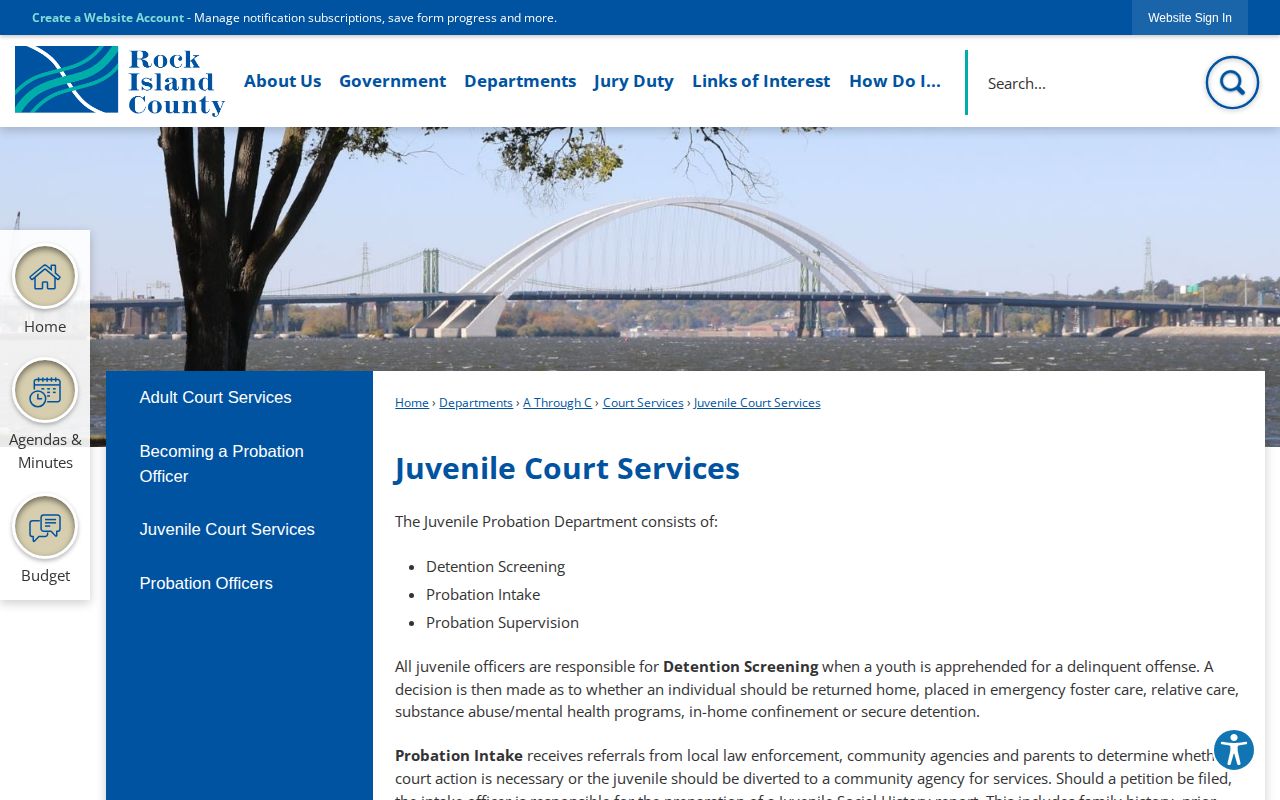
The official page supports the confidential route shown here. It should not be used to build a public list of young people, and it does not authorize a third party to identify a juvenile’s current placement.
Ostrom Hall
2116 25th Avenue
Rock Island, IL 61201
309-558-3700
Monday-Friday, 8:00 a.m.-4:30 p.m.
That main office can route an authorized inquiry, but no promise of disclosure should be made. A caller may instead be directed to counsel, the court, or a case-specific worker.
Juvenile Center Court Records
A juvenile court order may control detention, release, supervision, treatment, or placement. That does not make the order openly searchable in the same way as an adult Rock Island County criminal docket. The juvenile court and clerk apply the access rules that fit the case.
Bring a case number and proof of authority if instructed to appear. Do not assume a name-only public search will reveal the matter. Clerk staff can provide access that the law permits, but they cannot give legal advice or explain how a confidential order should be challenged.
The county court-facilities page also states that phones, cameras, and recorders are prohibited without authorization and that lockers are provided for cell phones only. The matched image records those official access directions.
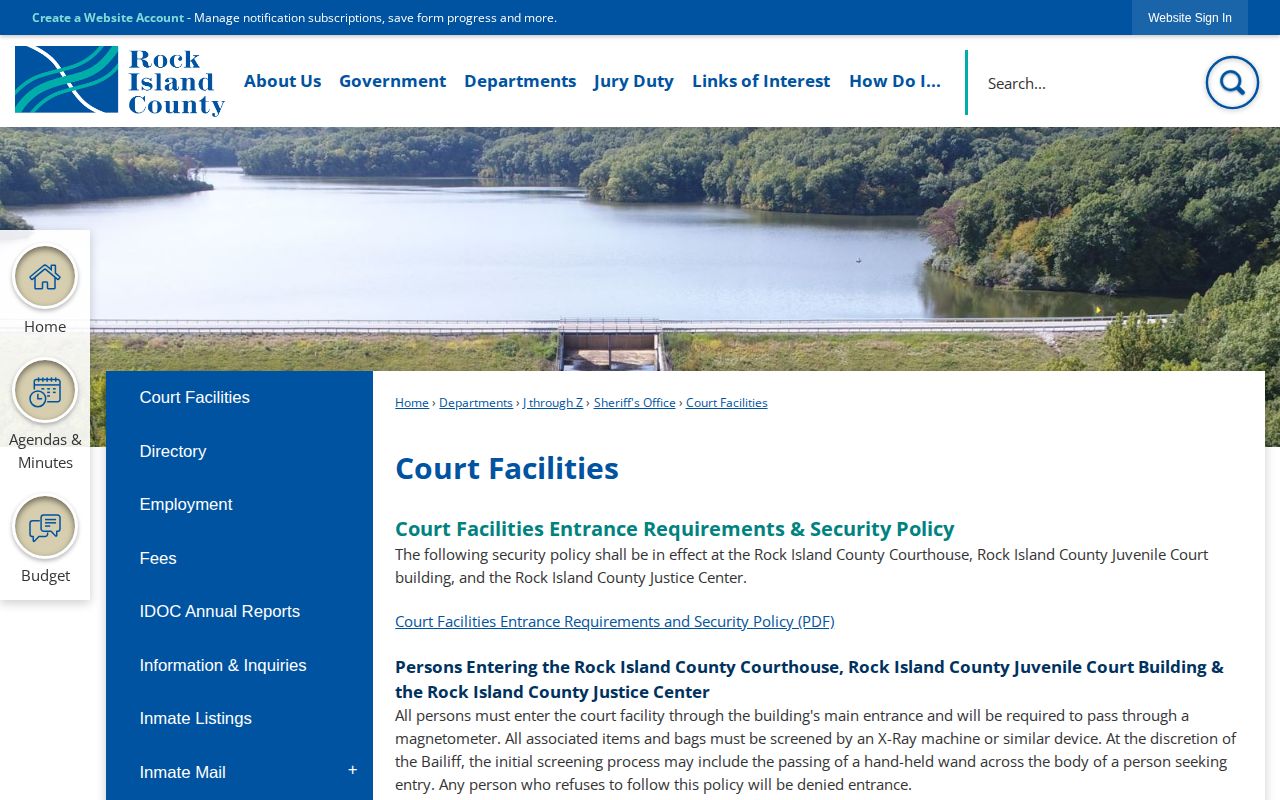
Plan an in-person visit around those limits. Ask in advance what identification, order, or appointment is required so confidential material is not discussed in a public lobby.
Juvenile Center Address Caution
County source documents conflict on whether the relevant street number is 520 or 525 18th Street. Neither number should be asserted as current without agency confirmation. This is more than a formatting issue because sending a family or filing to the wrong entrance can delay a time-sensitive matter.
Call Court Services or use the contact supplied in the case before traveling or mailing anything. Ask for the current building name, street address, entrance, appointment procedure, and permitted items. Do not rely on an old directory copy or a map pin when current county sources conflict.
For the same reason, the facility sidebar does not publish an unverified street number. The verified Court Services office at Ostrom Hall remains a routing contact, not a claim that the juvenile detention entrance is there.
Juvenile Release Versus Transfer
Physical departure from the center can involve more than one outcome. A return home differs from foster placement, treatment, in-home confinement, or movement to another secure setting. Using the single adult word “released” can hide those distinctions and disclose more than a public source supports.
Ask the authorized agency for the source’s exact description. If staff say the young person was placed, do not rewrite that as released to the community. If the young person remains in secure detention elsewhere, departure from one building is a transfer in practical terms, not freedom from custody.
VINE, IDOC, BOP, and the adult county portal are designed for other populations and agency systems. They should not be used to fill gaps in a confidential juvenile matter. A failed public search is expected and says nothing.
Juvenile Center Family Planning
An authorized family member should keep the assigned worker’s contact information, court paperwork, and any written placement instruction together. Confirm who may pick up the young person, where contact is allowed, and whether a hearing or approval must occur first. Those details are case-specific and were not published as general facility rules.
No verified public source supplies a universal release time, release door, family waiting area, transport promise, or property-return procedure for the juvenile center. Avoid importing the adult jail’s usual release windows. Adult first-appearance schedules describe a different facility and population.
If travel is required, confirm the destination directly before leaving. A relative placement, foster placement, treatment program, or secure setting may use a different site. Staff should be asked for instructions through the private channel rather than in a public comment or social-media post.
Juvenile Center Contact
The most reliable starting point is the case-specific contact already provided to an authorized person. If none is available, Rock Island County Court Services can route a general call. The office should not be expected to confirm a juvenile’s custody or placement to an unverified caller.
Ostrom Hall, 2116 25th Avenue
Rock Island, IL 61201
309-558-3700
Fax: 309-558-3738
Monday-Friday, 8:00 a.m.-4:30 p.m.
For court access, follow the clerk’s instructions and bring proof of authority. For immediate safety concerns, use the appropriate emergency or agency channel rather than a public-record search. Confidential handling is the core release-record rule for this facility.