
Rock Island Booking Photo Records
A mugshot is a photograph associated with an arrest or custodial record. Release from Rock Island County custody does not by itself erase that image. The photo may remain tied to the booking even after the live roster changes. Yet the image proves only that the photograph was associated with a record. It does not show whether the person is still confined, was discharged, was transferred, or was convicted.
Illinois FOIA section 2.15 includes an arrest photograph “when and if available.” Those words matter. The agency may not possess a usable image, and valid investigation, safety, security, juvenile, sealed, or expunged-record limits may apply. The law does not require Rock Island County to keep a permanent online gallery.
The Illinois arrest-information provision gives the exact public-record framework.
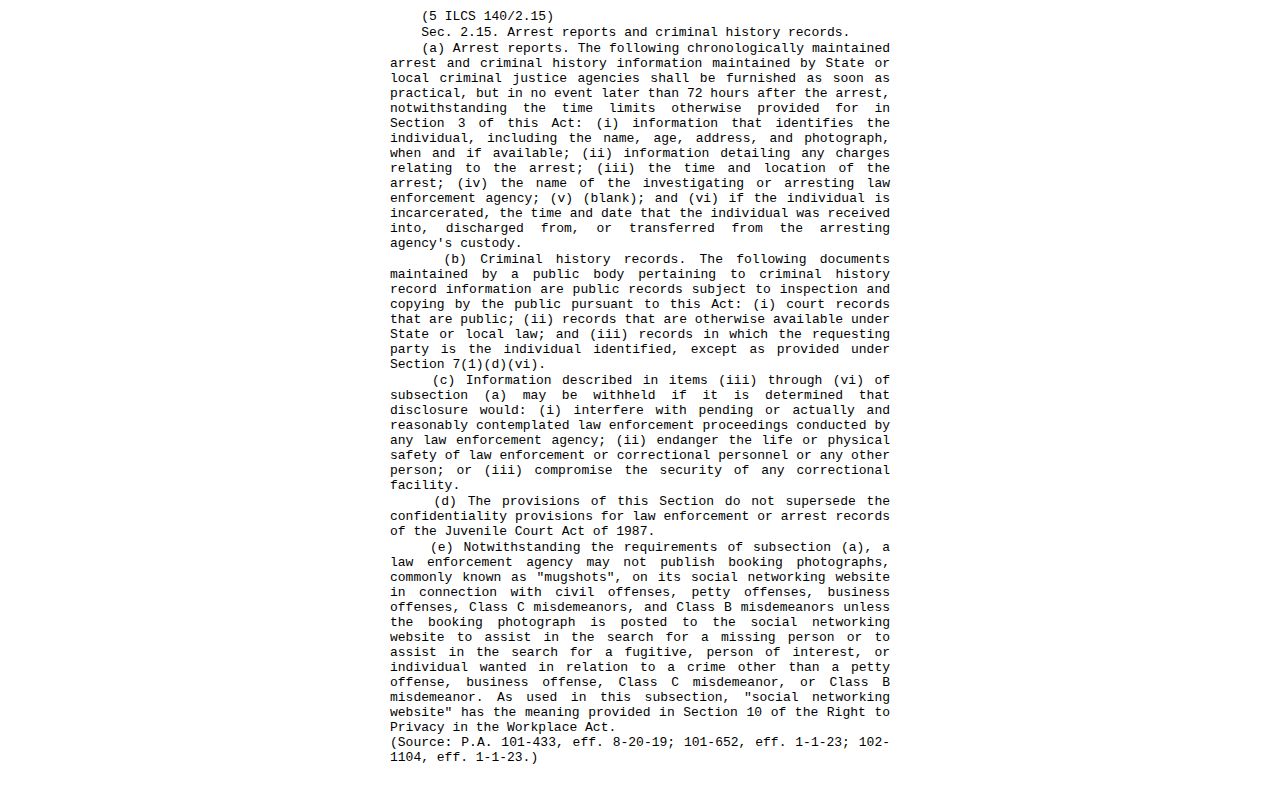
The statute supports access when an image is available while preserving its listed withholding rules.
Find Rock Island Release Mugshots
Start with official sources and match the source to the custody system. County and state photographs are not interchangeable.
| Channel | Photo? | How to access |
|---|---|---|
| County portal | Configured to show a mugshot | Search by name or Release Date and match age and arrest date. |
| Sheriff record | When available | Request the booking photograph and booking sheet through Sheriff FOIA. |
| IDOC profile | Front and side photos | Search a state prisoner by name, birthdate, or IDOC number. |
| VINE | Not a dependable photo archive | Use it for agency status and alerts, then verify with the source agency. |
| Official jail app | None verified | Use the mobile-capable county web portal. |
| News reports | Sometimes | Treat the image as a dated report, not custody proof. |
| Commercial copies | Possible | Do not rely on them; verify against official records. |
A county photo documents the Rock Island booking. An IDOC image is an institutional state photo and may have been taken later. For a federal record, neither source should be presented as a federal custody photograph.
Rock Island Portal Mugshot Search
The county portal is configured to display mugshot, name, race, sex, age, arrest date, and release date. Search the name first. If the person no longer appears in the current list, use Release Date for the suspected exit date or In Custody On for a historical snapshot. Compare identity fields and arrest date before treating the image as the right booking.
Rock Island County does not publish separate rolling 24-hour or 72-hour photo feeds. It also publishes no online retention period or refresh cadence. A photo that appeared before may later be unavailable online. Absence does not prove that the image was destroyed, sealed, or expunged. It may call for a records request.
The county warning also says a missing detainee was released or transferred. A booking photo cannot resolve that choice. Use the release date, Sheriff log, court order, and receiving system.
Request Rock Island Booking Photos
The Sheriff confirms a computerized mug-shot system. A focused FOIA request is the best route when the portal no longer shows the photograph.
- Identify the person by full name, aliases, arrest date, date of birth when appropriate, and booking number if known.
- Address the request to Sheriff FOIA Officer Stacey Watson, Investigations Secretary, 1317 Third Avenue, Rock Island, IL 61201.
- Ask for the booking photograph “when and if available,” plus the booking sheet if needed to identify it.
- Prefer electronic production and state a narrow date range.
- Ask for the current submission method and fee terms; no reliable county fee schedule was verified.
- Keep the written response, including any cited exemption or redaction basis.
The FOIA officer's phone is 309-558-3414. General hours are Monday through Friday, 8:00 a.m. to 4:30 p.m. Illinois FOIA generally provides five business days for a noncommercial request, with a written extension of up to five more for a statutory reason. The clock is not a promise that every image will be released.
Rock Island IDOC Photo Differences
East Moline Correctional Center is an IDOC prison in Rock Island County. Someone released from that prison should be searched in the statewide IDOC system, not the county jail portal. The profile can include front and side photos, IDOC number, name, Parent Institution, Offender Status, Location, date of birth, and physical descriptors.
Read status and location before date fields. Last Paroled Date may mark release onto supervision. Projected Discharge Date concerns the expected end of the sentence relationship. Neither turns the IDOC image into a county booking photo. If a formal state image or custody history is needed, use the IDOC FOIA route.
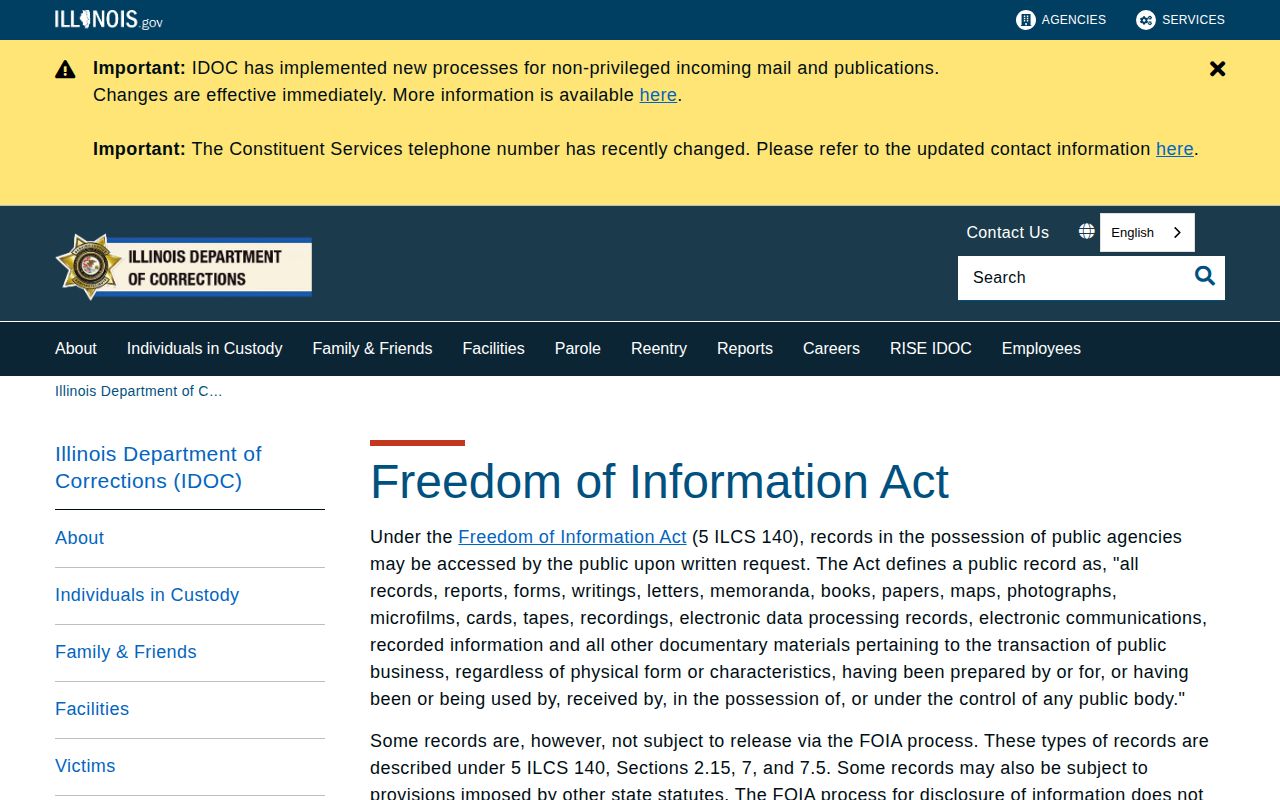
IDOC records are the proper source for a state institutional photograph and state custody history.
Rock Island News Photo Limits
A local news report may preserve a photograph from the time of an arrest or court event. Its date and caption can help locate the right case, but the publication is not proof of current custody, a release date, or the final disposition. Check the portal, Sheriff record, and court docket.
Commercial mugshot aggregators can retain stale captions, confuse people with similar names, or keep an image after official public access changes. No such site is linked or endorsed. A payment demand from a private publisher does not establish what the Sheriff or court must do. Use the original agency's correction and records process.
Rock Island Photo Sealing Effects
Illinois sealing and expungement eligibility is governed by 20 ILCS 2630/5.2 and depends on the case outcome, sentence, dates, and exclusions. Release from jail alone does not create eligibility. Illinois Courts provides statewide forms and a guided process, filed in the circuit where the case arose.
A granted order can change public access to official records. It should not be described as a promise that every copied image disappears from every source. Ask the originating agency how it implements the order and provide the correct case details. Portal absence by itself does not prove sealing or expungement; retention, spelling, migration, and agency scope can also explain it.
No current primary-source Illinois statute was verified that creates a general anti-pay-to-remove right for mugshot sites. Illinois consumer law addresses correction of certain for-profit criminal-record information, but it is not an automatic official-photo takedown rule.
Verify Rock Island Mugshot Identity
A booking photograph should be matched to the person and booking before it explains any record. Compare full name, age, arrest date, and case details. Names can collide. One person can have more than one booking, so two authentic images may belong to different events. A later IDOC portrait can look different and still be genuine.
Separate image identity from custody status. A photo does not show that someone remains in jail. A release date may mark discharge or transfer. The court order can explain the legal event, and the Sheriff log can document exit time. If state custody followed, IDOC status and location control that next step.
Registry photographs require the same restraint. An official registry can publish identity and registration status for a qualifying person, but it is not a universal custody timeline. A missing or noncompliant designation does not prove a new conviction, warrant, or release date.
Correct Rock Island Photo Records
If an official portal associates the wrong photograph or details with a booking, save the source page, record date, booking number, and exact error. Contact the Sheriff's office and ask for its correction process. A focused statement tells the record keeper which field and image need review.
When the dispute concerns the court case, use the Circuit Clerk record and applicable Illinois Courts forms. Clerk staff can provide public copies but cannot decide eligibility or give legal advice. When the image is an IDOC institutional photo, contact IDOC rather than asking the county jail to alter it.
Private publishers control their copies, but their response does not change the originating record. Document an official correction or order and present it directly. Avoid claims that one request must erase every copy, since no such general result was verified.
Rock Island Photos After Transfer
A county booking photograph may remain the best image of a county arrest when the person later enters IDOC or federal custody. That does not make it the receiving agency's image. Label the photograph by source and booking date. Then use the receiving system for current status. This matters when a county Release Date marks transfer rather than community discharge.
If a photograph appears but the release record does not, search the arrest date and court case first. The portal may have an operational scope even though no online retention term is published. A narrow Sheriff request can ask for both the image and the received, discharged, or transferred fields, placing the photo in its proper custody timeline.
When an official source withholds an image, read the written basis. Illinois law allows specified limits involving pending proceedings, danger, correctional security, juveniles, and protected court records. A denial or redaction is not proof that no image exists. It is the agency's response under the rules that apply to that request.
Public Record Search
Sponsored Results
Rock Island Mugshots and Social Media
Illinois law limits law-enforcement agencies from publishing booking photos on their social networking websites for civil, petty, business, Class C misdemeanor, and Class B misdemeanor matters, unless a listed public-safety purpose applies. That restriction is specific. It is not a blanket FOIA ban and does not require an agency to operate an online archive.
No official Rock Island County Sheriff jail mobile app was found in the bounded review. The documented tool is the mobile-capable web portal. Do not substitute a county mapping app or a third-party alert product. If the portal lacks the image, the official next step is Sheriff FOIA.